Best Futures for Beginners 2026 - Complete Trading Guide
Category: Getting Started | Date: 2026-05-06
Which Futures Contract Should You Trade First?
New futures traders are overwhelmed by choice. ES, NQ, YM, CL, GC, MNQ, MES — dozens of symbols, each with different tick values, volatility, and margin requirements. Picking the wrong contract as a beginner can lead to oversized losses and a blown account on day one.
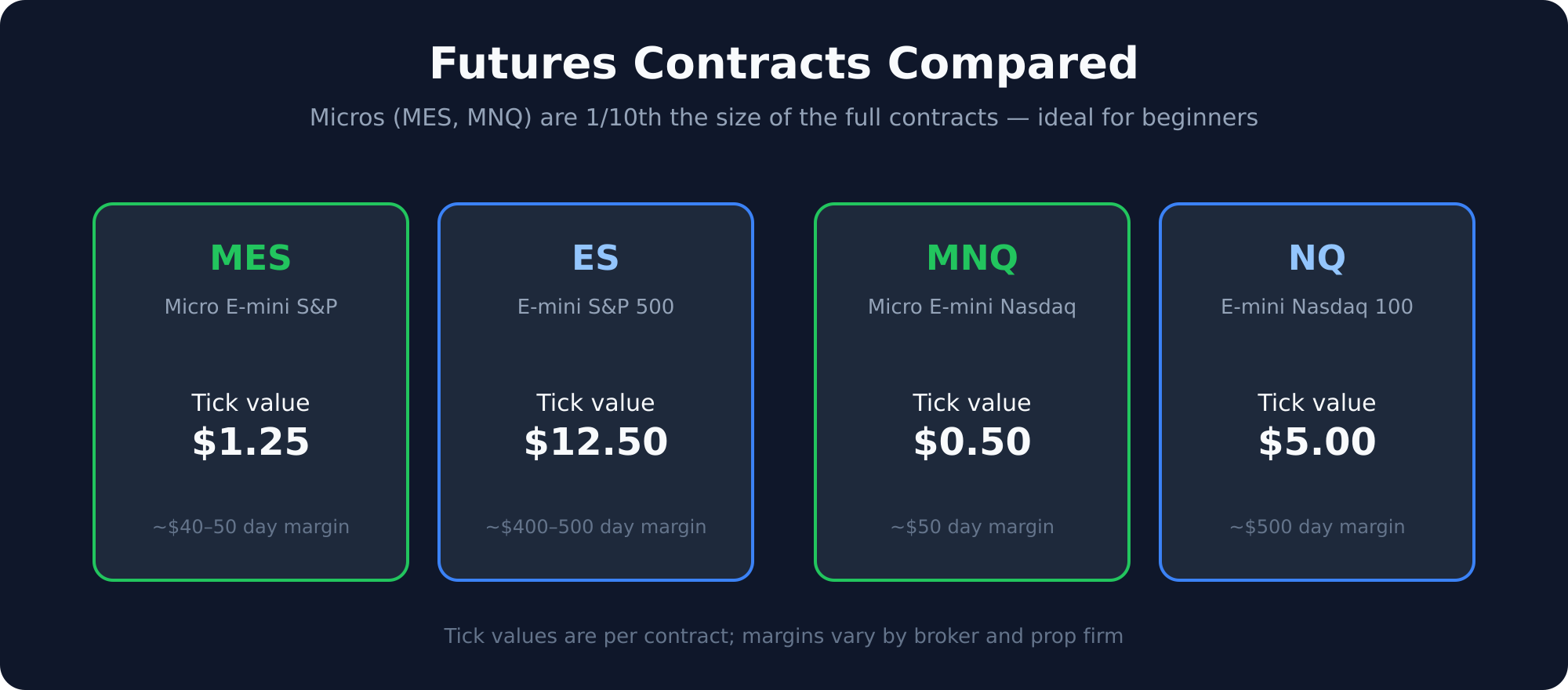
This guide ranks the best futures contracts for beginners based on liquidity, margin cost, tick size, and intraday volatility.
The Top 5 Contracts for Beginners
1. MNQ — Micro Nasdaq-100
The micro Nasdaq-100 is the best all-around starter contract. It combines high liquidity with a tiny tick value, making it forgiving for new traders.
- Tick value: $0.50 per tick
- Average daily range: 80–150 points ($40–$75 risk per contract)
- Initial margin: ~$100–$200
- Why beginners love it: Small losses teach discipline without catastrophic drawdowns
2. MES — Micro S&P 500
The Micro S&P 500 is slightly slower than MNQ but just as liquid. It moves more predictably and is less prone to sudden spikes.
- Tick value: $1.25 per tick
- Average daily range: 20–40 points ($25–$50 risk per contract)
- Initial margin: ~$100–$200
- Why beginners love it: Smoother price action, easier to read support and resistance
3. MGC — Micro Gold
Micro Gold offers a completely different market dynamic. It trends well and is less correlated with equity indices.
- Tick value: $1.00 per tick
- Average daily range: 15–30 points ($15–$30 risk per contract)
- Initial margin: ~$300–$500
- Why beginners love it: Slower pace, strong trends, macro-driven moves
4. ES — E-Mini S&P 500
The standard E-Mini is the most liquid futures contract in the world. But the larger tick value makes it dangerous for small accounts.
- Tick value: $12.50 per tick
- Average daily range: 20–40 points ($250–$500 risk per contract)
- Initial margin: ~$12,000
- Best for: Traders with $100K+ accounts or proven consistency on micros
5. NQ — E-Mini Nasdaq-100
The E-Mini Nasdaq is fast, volatile, and expensive. It can move 20 points in seconds during news events.
- Tick value: $5.00 per tick
- Average daily range: 80–150 points ($400–$750 risk per contract)
- Initial margin: ~$16,000
- Best for: Experienced traders who have mastered MNQ and want more size
Contracts to Avoid as a Beginner
- CL (Crude Oil): Highly volatile, gap-prone, news-sensitive. One bad inventory report can move 200 ticks.
- NG (Natural Gas): Extreme volatility. Known for blowing accounts with single-session 500-tick moves.
- ZB (30-Year Bonds): Complex macro drivers. Requires deep understanding of interest rate policy.
- Bitcoin futures: 24/7 trading sounds appealing but the volatility is unforgiving for beginners.
The Beginner Sequence
We recommend this progression for new futures traders:
- Months 1–3: Trade ONLY MNQ or MES on a demo or micro account
- Months 4–6: Add a second contract (MGC or the other micro)
- Months 7–12: Scale to mini contracts once you have 6 months of consistent profitability
- Year 2+: Add CL, NQ, or additional markets based on your proven edge
Signal Trade App makes this progression easy. Trade micros on your evaluation accounts while your funded mini accounts copy with auto-conversion. Start small, scale safely.
The best contract for a beginner is the one that lets them survive long enough to learn. MNQ and MES are the training wheels of futures trading.
Ready to Start Trading Futures?
Start with micro contracts on a demo account. Once you are consistent, open a prop firm evaluation and scale with Signal Trade App. Copy your winner to multiple funded accounts simultaneously and multiply your payouts without multiplying your workload.
Frequently Asked Questions
What is the Best Futures for Beginners 2026 - Complete Trading Guide?
Learn how to start futures trading for beginners. Complete guide to micro contracts (MES, MNQ), margin requirements, leverage, and trading strategies for new traders.
How do I choose the Best Futures for Beginners 2026 - Complete Trading Guide?
Look at broker support, account limits, risk controls, pricing, and execution speed. Learn how to start futures trading for beginners. Complete guide to micro contracts (MES, MNQ), margin requirements, leverage, and trading strategies for new traders.
Start Copy Trading Free
Signal Trade App lets you copy one trade across unlimited prop firm accounts in under 50ms. Sign up free with a 5-day Pro trial (credit card required, no charge during trial).
Related Reading
- Help Center — Setup guides, broker connections, and risk management
- Supported Platforms — Tradovate, NinjaTrader, TradingView, and more
- Blog — More guides on copy trading, prop firms, and futures automation